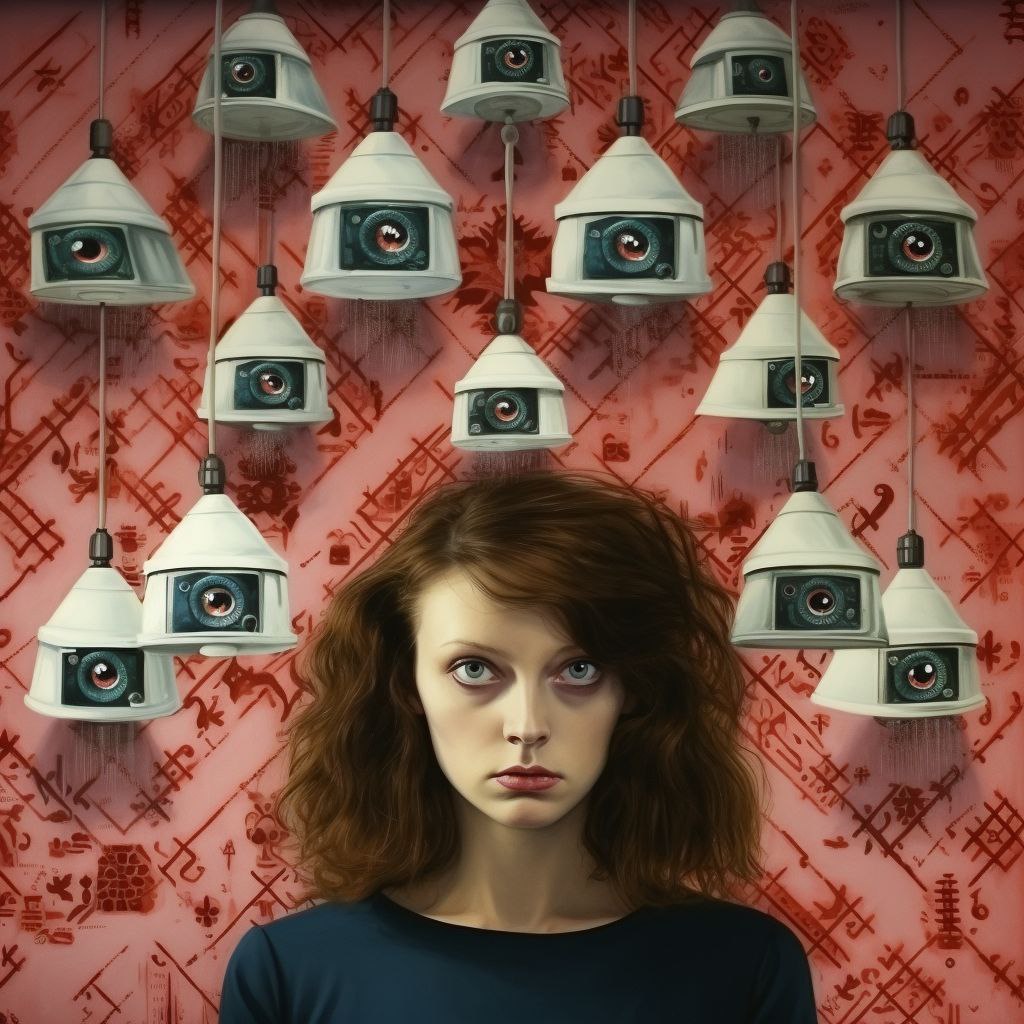
This piece of statist propaganda, used for decades to justify ever increasing levels of state surveillance on innocent people, has sadly been so effective it is not at all uncommon for me to hear it uttered by friends and family. At this point, whenever I mention a privacy concern to someone IRL, I expect this NPC default response, because usually I get it.
But if you take even a couple minutes to consider the true implications, it falls apart very quickly. If this is something you have caught yourself saying, perhaps it's worth considering these points.
To quote the opening paragraph of the Cypherpunk Manifesto:
Privacy is necessary for an open society in the electronic age. Privacy is not secrecy. A private matter is something one doesn't want the whole world to know, but a secret matter is something one doesn't want anybody to know. Privacy is the power to selectively reveal oneself to the world.
That last sentence really hits the nail on the head. A desire for privacy is not a desire to bury something unethical or illegal. It is rather a fundamental right to selectively reveal yourself.
Perhaps that sounds abstract. What are some real life examples? How does it actually affect you?
John McAfee articulated this well when he
In short, he gave the following examples:
- He just met the interviewer. He isn't going to divulge intimate details of his life - especially not when it is being recorded.
- Likewise, when speaking to a cashier, he may make small talk but he isn't going to talk deeply about his personal life.
- If he is speaking to a casual acquaintance he may feel more comfortable discussing things he wouldn't with strangers, for example health, family, and social life.
- When speaking to a close personal friend, he may feel comfortable telling them almost everything.
- When talking to his wife, he may feel comfortable disclosing literally everything. Unless he is sleeping with her sister.
The point here is self-evident. It is very normal to feel different levels of comfort when discussing different personal topics with different people.
But this is not only for one's own benefit. To use a personal example, I am generally fairly open about my enjoyment of drugs and kinky sex, but if I just met someone I won't open with this because it will likely make them uncomfortable. Unless I met this person at a BDSM and drugs party, of course.
My point here is that the elements of yourself you decide to reveal are highly contextual. What you opt to reveal is likely to depend not only on personal factors, but arguably even more on external factors and social norms - neither of which is under your control, and both of which you abide by for the benefit of others.
Imagine if a total stranger came up to you and began telling you about what he did with his girlfriend in bed last night and how his mother's cancer treatment is going, you would likely consider this person to be unstable or perhaps on too much MDMA. In either case, it is not normal human behaviour.
Everyone has things they wish to hide depending on the scenario, who they're talking to, how they're feeling, and myriad other factors. A close friend of mine had a parent tragically pass away recently. He didn't want to talk about it. Was he acting suspiciously? Should I have informed him that he ought to discuss this personal matter lest anyone suspect he is hiding a nefarious plot?
See how insane this paranoid line of thought is? Yes, understand this: believing that everyone is obligated to reveal their personal lives to you, otherwise they must be covering up a terrorist plot, is what is schizophrenic, not desiring privacy.
Desire for privacy does not have its roots in suspicious behaviour - no one alerts the authorities because a work acquaintance doesn't reveal personal information to them, and yet the ideology being hammered into people's heads, which they blindly repeat without an ounce of critical thought, is based on this absurd idea that privacy - the right to selectively reveal yourself - is an inherently suspicious act.
I like to challenge anyone who believes that they have "nothing to hide" to put up cameras in every room of their home, including their bedroom and bathroom, to stream to the public 24/7, and to do the same with the screens of their phones and computers.
After all, why would this concern you if you have nothing to hide?
Funnily enough, not one defender of this idea has ever taken me up on that offer.
I wonder what they're hiding.